
Accessible Home Entrances: How to Make Your Driveway Safer for Winter
Winter brings shorter days, colder temperatures and unpredictable weather. While many of us think about wrapping up warm and putting the heating on, the changing seasons can create additional challenges for older people and those living with disabilities or reduced mobility.
For some, getting from the car to the front door can become one of the most difficult parts of the day. Wet paving, slippery driveways, uneven pathways and icy steps can turn an otherwise straightforward journey into a potential hazard.
These challenges aren’t exclusive to wheelchair users. People living with arthritis, balance difficulties, visual impairments, age-related mobility changes or temporary injuries may also find navigating their outdoor spaces increasingly difficult during the winter months.
So, what can homeowners do to make getting in and out of their properties easier and safer?
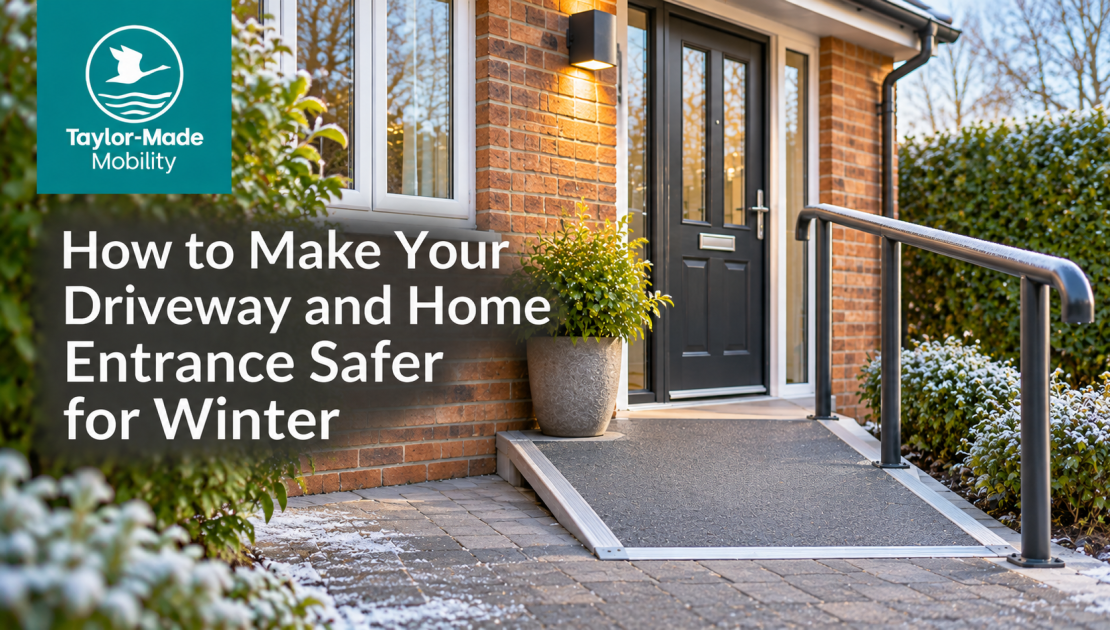
At Taylor-Made Mobility, we believe accessibility starts before you reach the front door. With the right accessible home entrance, it’s possible to improve access, reduce everyday obstacles and help people maintain their independence throughout the year.
The winter challenges facing people with limited mobility
Cold weather affects everyone differently, but certain outdoor conditions can make everyday activities particularly challenging for older people and those with mobility difficulties.
Here are some of the common problems to consider.
1. Icy and slippery driveways
Rain, frost and freezing temperatures can transform driveways and paved surfaces into slippery areas. For someone with reduced balance, muscle weakness or difficulty walking, even a short distance can become difficult to navigate.
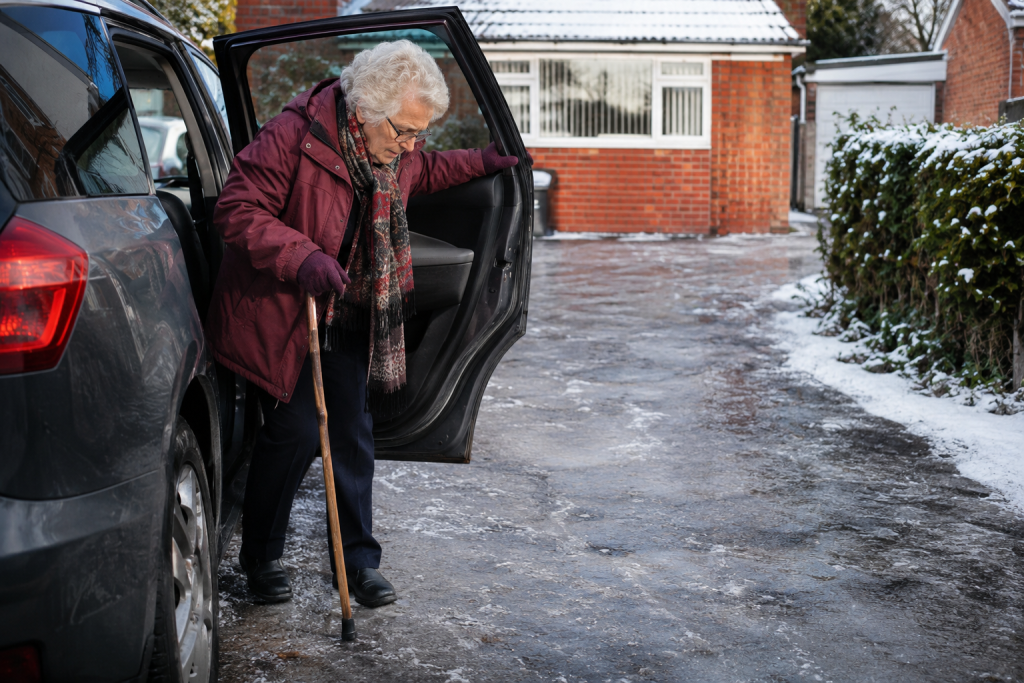
The risk can be particularly concerning for people who rely on walking sticks, frames or mobility aids, as maintaining stability on slippery ground becomes much harder.
2. Uneven pathways and raised surfaces
Cracked paving, loose gravel, uneven slabs and changes in ground level can create trip hazards throughout the year. However, these become harder to identify when covered by fallen leaves, frost or poor lighting.
For wheelchair users, uneven surfaces can also make travelling across a driveway or pathway uncomfortable and difficult, particularly when navigating slopes or changes in level.
3. Steps and steep entrances
A few steps leading up to a front door might not seem particularly challenging to someone with full mobility. However, for someone with arthritis, reduced strength or balance difficulties, they can present a significant obstacle.
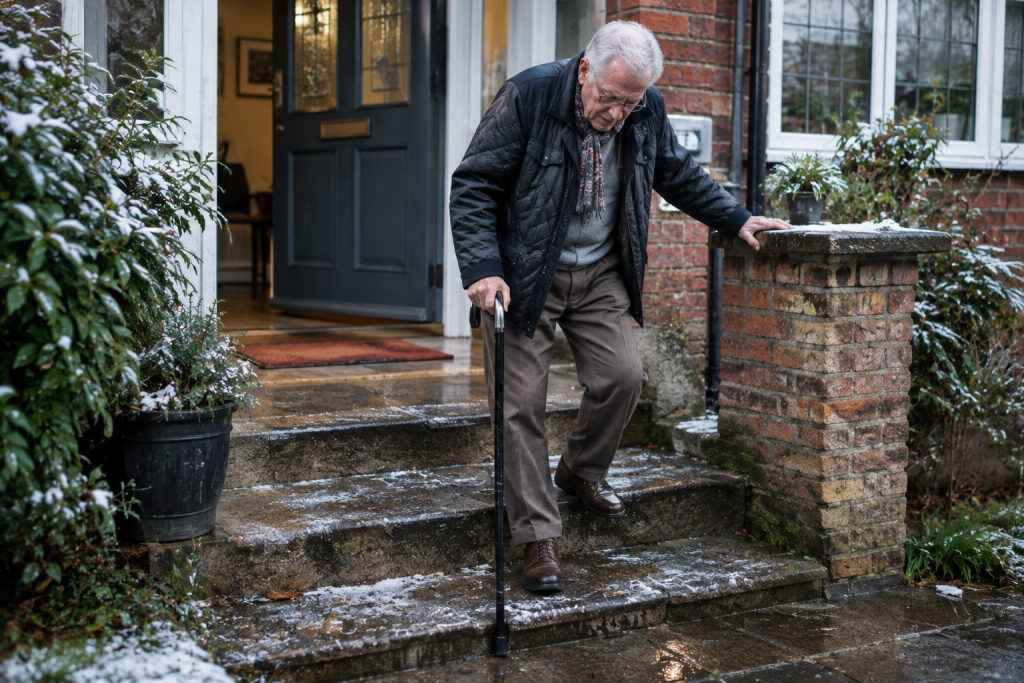
Add wet weather, icy surfaces and slippery footwear, and navigating steps can become even more daunting.
4. Narrow pathways and restricted access
Narrow entrances and pathways can make it difficult for wheelchair users and people using walking frames or mobility scooters to manoeuvre comfortably.
This can become particularly frustrating when there isn’t enough room to turn, pass through a gateway or approach the front door safely.
5. Poor visibility during darker mornings and evenings
With daylight hours considerably reduced during winter, people are more likely to encounter poorly lit driveways and entrances.
For those with visual impairments or reduced vision, identifying steps, kerbs, uneven paving and other obstacles can become more difficult, increasing the risk of trips and falls.
How Taylor-Made Mobility can make your home more accessible
The good news is that there are practical ways to improve outdoor accessibility. The right adaptations will depend on the property, the available space and the individual’s mobility requirements, but even relatively straightforward improvements can make a meaningful difference.
At Taylor-Made Mobility, we provide a range of external home adaptations designed to make getting in and out of your property easier.
1. Levelled driveways and pathways
Uneven ground, steep gradients and raised paving can make navigating outdoor spaces difficult.
We can help improve accessibility by levelling suitable driveways and pathways, creating a more consistent surface that is easier to navigate on foot or using mobility equipment.
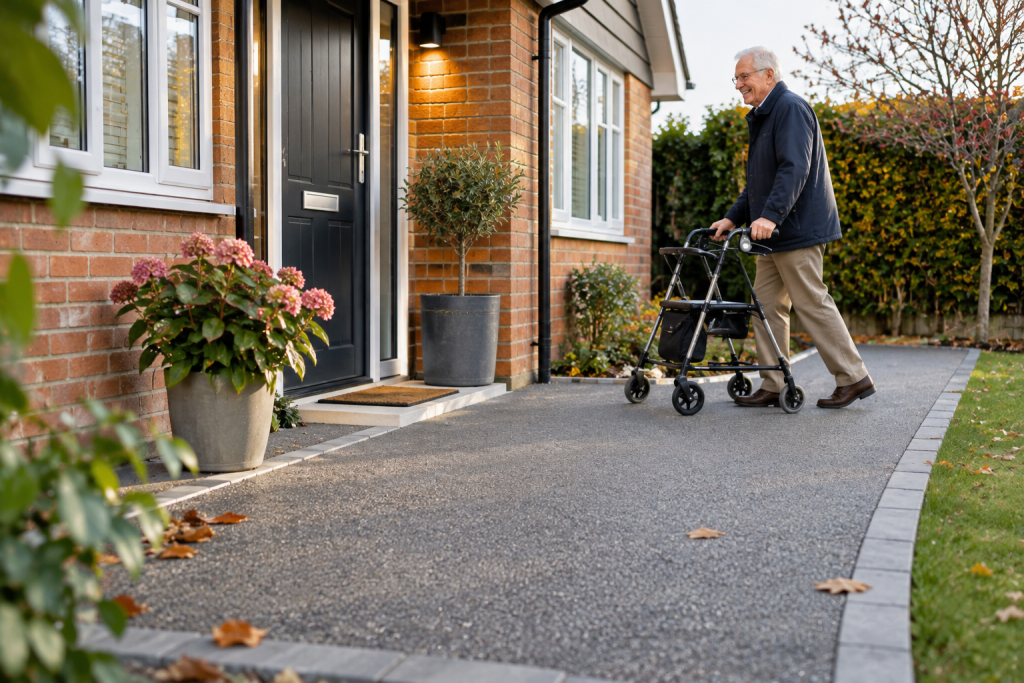
A well-considered layout can further help reduce unnecessary changes in level and make approaching your front entrance more manageable.
2. Slip-resistant outdoor surfaces
Choosing appropriate surfaces is an important consideration when improving outdoor accessibility.
Slip-resistant paving and flooring can provide better grip underfoot, helping to make driveways, pathways and entrance areas easier to navigate in wet weather.
Combined with appropriate drainage and regular maintenance, suitable materials can help reduce some of the hazards associated with winter conditions.
3. Wider entrances and access points
For wheelchair users and people relying on mobility equipment, narrow doorways and restricted access points can make entering and leaving a property unnecessarily difficult.
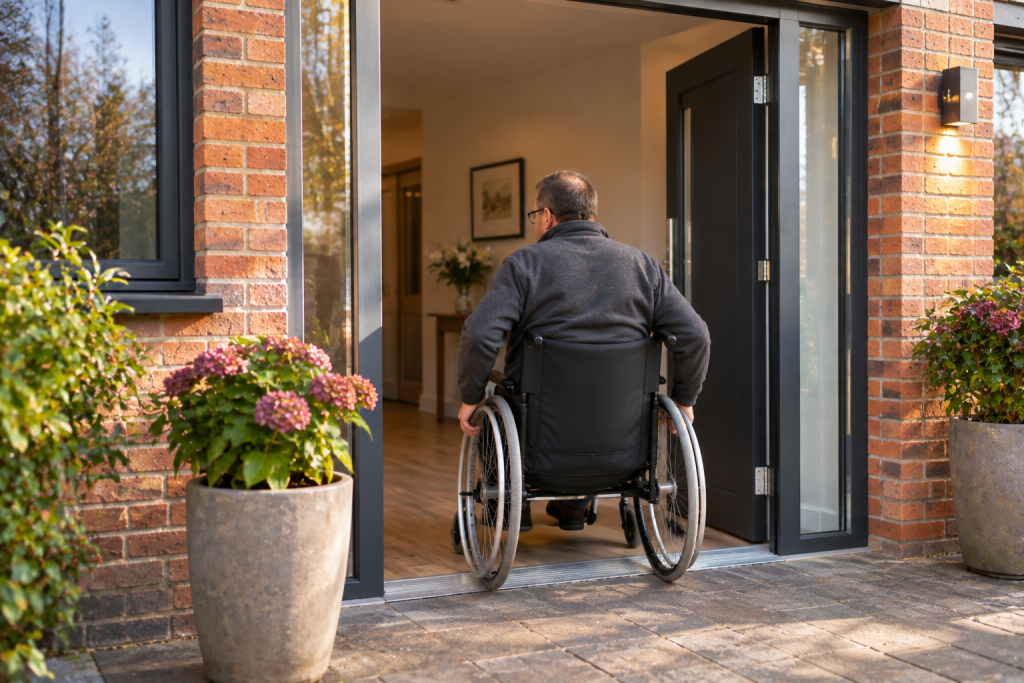
Widening suitable entrances and access points can create additional manoeuvring space, making it easier to approach and pass through the entrance.
It’s a practical adaptation that can make a considerable difference to everyday independence.
4. Accessible ramps
Steps can present a significant barrier for people with limited mobility, particularly wheelchair users.
Installing a suitably designed access ramp can provide an alternative route into and out of the property, removing the need to negotiate steps.
Ramp design is important. Gradients, available space, surfaces and handrail requirements all need to be considered to ensure the finished installation is appropriate for the person using it.
5. External grab rails and handrails
Sometimes, a little additional support can make a big difference.
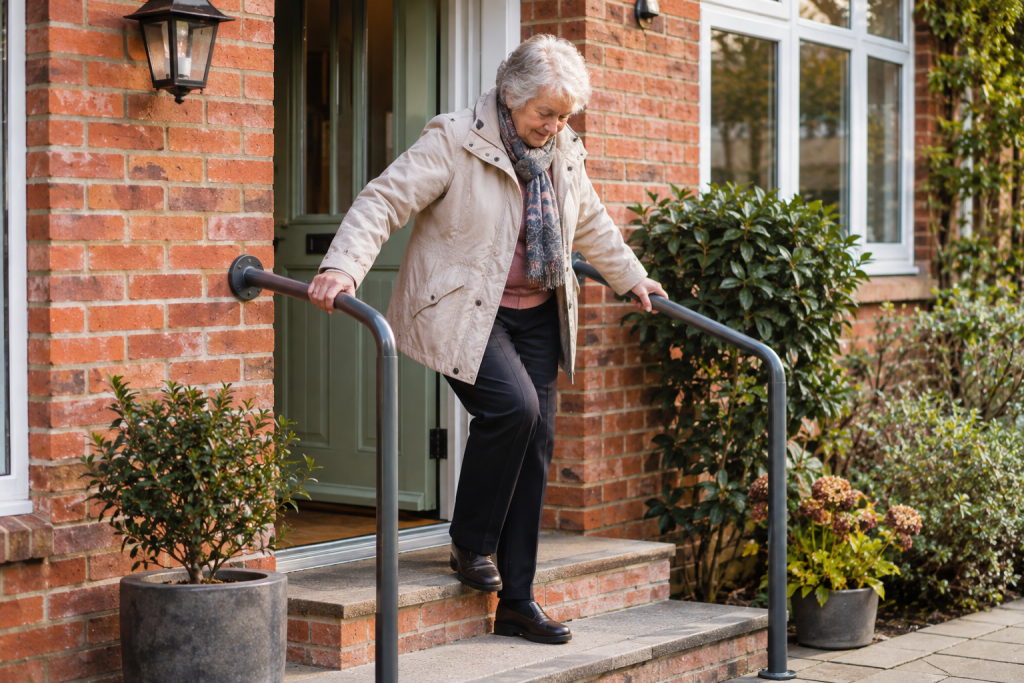
Strategically positioned grab rails and handrails can provide extra stability when navigating steps, slopes and entrance areas.
For people who experience balance difficulties or reduced strength, having something secure to hold can help make everyday movements feel more manageable.
Making your home accessible all year round
Winter is a useful reminder to look at how accessible your property really is. However, these improvements aren’t just about preparing for colder weather.
A level driveway, suitable slip-resistant surfaces, wider entrances, access ramps and grab rails can make everyday life easier throughout the year.
Most importantly, improving accessibility is about more than the physical environment. It’s about helping people feel confident leaving their homes, maintaining their independence and continuing to enjoy everyday activities without unnecessary obstacles.
Could your driveway or entrance benefit from improved accessibility?
How Taylor-Made Mobility can help
At Taylor-Made Mobility, we understand that every property and individual has different requirements. Whether you’re looking to improve an existing driveway, create easier access to your front door or explore suitable external adaptations, we’re here to help.
Get in touch with our friendly team to discuss your requirements and discover how we can help make your home more accessible, safer and easier to navigate.
Taylor-Made Mobility: Making everyday living easier