
Back Care Awareness Week 2026: How Can Your Home Support Chronic Back Pain?
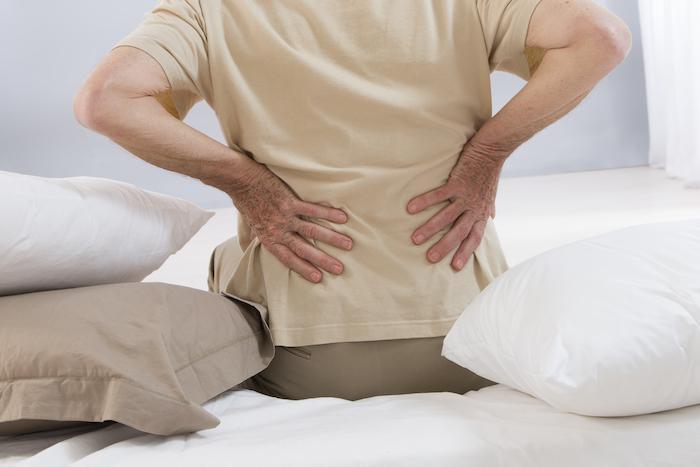
Living with chronic back pain can affect much more than your comfort. Everyday activities that once felt completely routine, from getting in and out of the shower to climbing the stairs, reaching into cupboards or getting dressed, can become more difficult.
While there are many ways to manage back pain, it’s also worth considering whether your home could be making everyday movement harder than it needs to be.
Small changes to the way you use your home, alongside carefully considered adaptations, can reduce unnecessary bending, reaching and physical strain while making it easier to move around independently.
How can your home affect back pain?
We often think about back pain in terms of exercise, posture or medical treatment. But the physical demands of everyday life matter too.
Think about how often you:
- Bend down to get in and out of the bath
- Reach into low cupboards or high shelves
- Twist to use bathroom fixtures
- Climb the stairs several times a day
- Stand for long periods while preparing food
- Stretch or bend to get dressed
- Get in and out of low chairs
- Carry things between different rooms
None of these activities is necessarily a problem on its own. But when you’re living with ongoing pain or reduced mobility, repeatedly carrying out movements that feel difficult or uncomfortable can make everyday life more challenging.
Creating easier routes around your home
When moving around the house is painful, you may naturally start looking for ways to reduce unnecessary journeys.
Think about the route you take between the rooms you use most. Are there obstacles that make it harder to move around? Are frequently used items stored somewhere difficult to reach? Do you have to navigate stairs several times a day when you could organise your living space differently?
Creating a clear, straightforward route between key areas of your home can make a surprising difference. This might mean moving furniture, reorganising storage or making more significant changes to improve accessibility.
The aim isn’t to change your entire home. It’s to make it work better for you.
Reducing unnecessary bending and reaching
Bending, stretching and twisting can be particularly challenging when you’re experiencing back pain. Look around the rooms you use most and consider where these movements happen repeatedly.
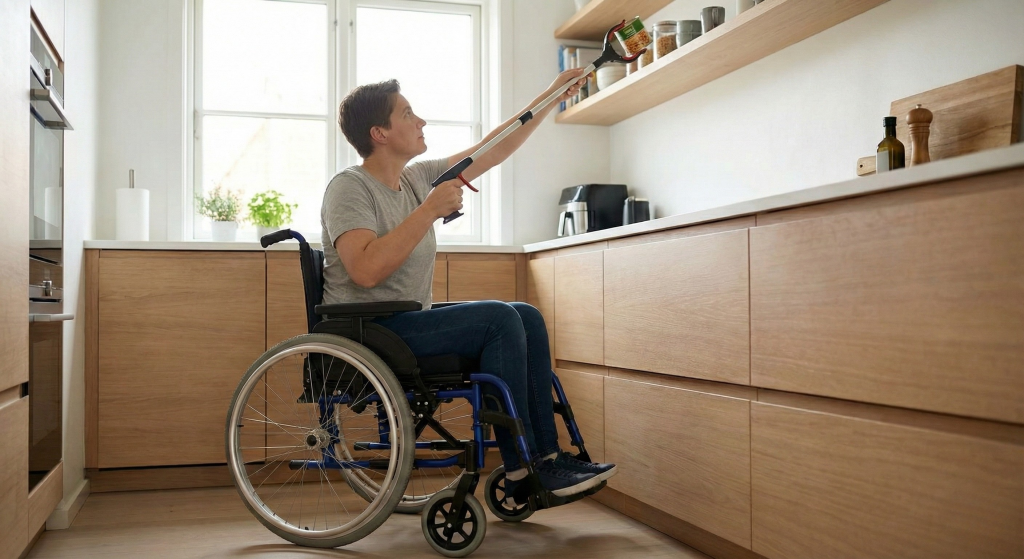
In the kitchen, for example, everyday items could be stored where they’re easier to reach. In the bathroom, fixtures and storage can be positioned with accessibility in mind. Even the way you get dressed can involve considerable bending. Having somewhere stable and comfortable to sit can make the process easier for some people.
These aren’t necessarily major adaptations. Sometimes, simply reconsidering how a space is organised can remove an unnecessary physical challenge.
Could your bathroom be making things harder?
Bathrooms are one of the most important areas to consider when you’re living with back pain.
Getting into a traditional bath can involve bending, lowering yourself down and then getting back up again. A slippery surface can also move feel less secure.
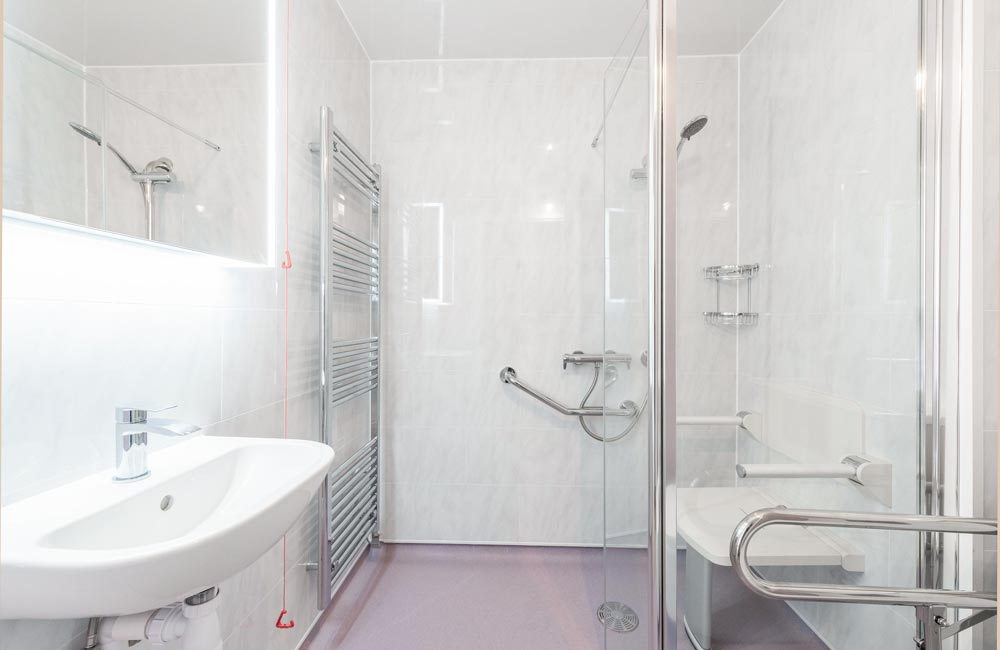
Depending on your needs, adaptations could include:
- A walk-in shower
- A level-access or wet room
- Shower seating
- Grab rails and other support
- An accessible shower layout
- Easier-to-use controls
- A raised or more accessible toilet
The right solution will depend on the individual and how they use their bathroom. An accessibility assessment can help identify where the difficulties are and which adaptations could make the most meaningful difference.
What about the stairs?
For some people living with chronic back pain, stairs can become one of the biggest challenges at home.
If you’re regularly using the stairs despite finding them painful or difficult, it’s worth thinking about whether there’s a safer and easier way to move between floors.
A stair lift could provide an alternative to repeatedly climbing the stairs. It can also help people continue using both floors of their home without having to relocate their bedroom or other essential facilities.
However, a stair lift isn’t the only consideration. Depending on the layout of your home and your individual needs, other adaptations or changes to how you use your space may also be appropriate.
Think about the home you need in the future
When you’re living with chronic back pain, it can be tempting to make changes only when something becomes too difficult. However, planning can give you more options.
An accessible home doesn’t necessarily mean making your home look clinical or changing everything at once. It can mean making thoughtful choices that allow you to remain comfortable, independent and able to use the spaces that matter to you. For example, if you’re already considering replacing an old bathroom, it could be an opportunity to create a more accessible space rather than simply replacing like for like.
How can Taylor-Made Mobility help?
At Taylor-Made Mobility, we understand that accessibility isn’t one-size-fits-all. We can look at how you currently use your home, where you’re experiencing difficulties and what could make everyday movement easier.

Depending on your needs, this could involve a more accessible bathroom, wet room, walk-in shower, stair lift or other home adaptation.
The starting point isn’t a particular product. It’s understanding you, your home and the things you want to be able to do in it.
If chronic back pain is making everyday life at home more difficult, an accessibility assessment could help you explore what’s possible.
Get in touch with Taylor-Made Mobility to discuss your home adaptation needs.